3 Misconceptions About Aquatic Therapy
Water-based physical therapy gets misunderstood a lot, and the myths keep some people from trying it.
October 14, 2026 · 4 min read
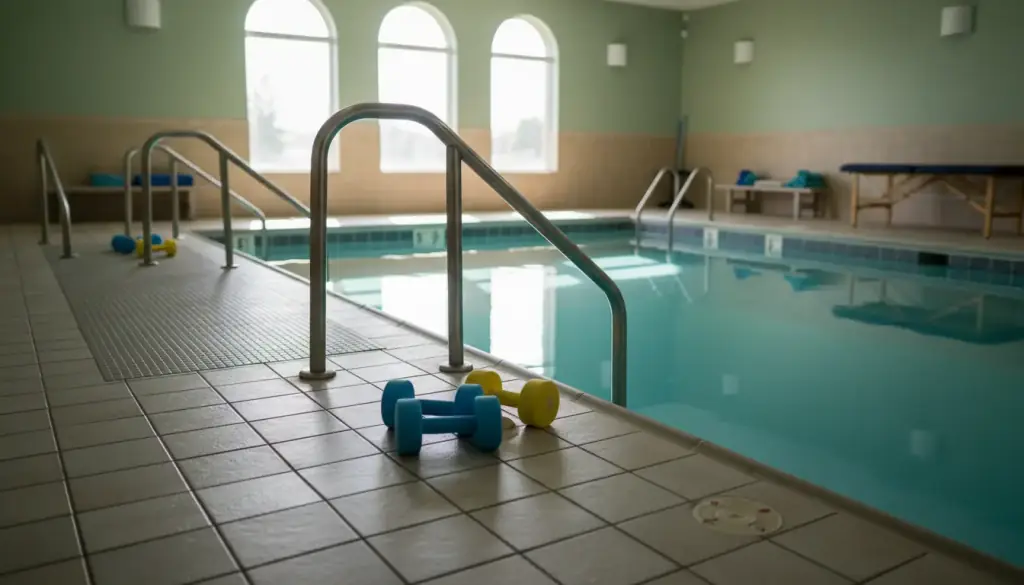
Mention aquatic therapy and people picture one of two things: someone doing slow laps, or a group of retirees in a pool class. Neither is quite right. Aquatic therapy is physical therapy, delivered in water, with a therapist guiding what you do and why.
Roberts Physical Therapy offers it at its Wisconsin Rapids clinic only, and the clinic describes the goal in two parts: it increases strength and balance, and it decreases pain tied to land-based activity. It's one of the tools in the clinic's evidence-based approach, alongside manual therapy, dry needling, and exercise-based rehabilitation. Still, a few myths keep coming up. Here are three.
Misconception 1: You have to be a good swimmer
Aquatic therapy isn't swimming. In most therapeutic pool work, you aren't racing or stroking across the water. You stand, walk, step, squat, reach, and balance while the water supports part of your body weight.
That support is the point. Water's buoyancy takes load off your joints and spine, so a movement that hurts on land may feel manageable in the pool. A therapist can then build up from there. If you're nervous about deep water or haven't been in a pool in years, say so when you schedule, and ask the clinic how the pool is set up and what to bring. Questions like that are normal, and the staff would rather answer them than have you stay home.
Misconception 2: It's only for older adults or people who can't do 'real' exercise
Walk into the water with that assumption and you'll miss what it can do. Roberts Physical Therapy says aquatic therapy suits people with chronic pain, arthritis, balance disorders, fractures, joint replacements, and surgeries. Notice that list is organized by condition, not by age.
It also isn't a soft option. Water pushes back. Moving your arms or legs through it takes effort, and the resistance goes in every direction, which means muscles that coast along on land have to work. People are often surprised at how tired they are after a session that felt easy while they were doing it.
What water does offer is a gentler place to start. Someone coming off a joint replacement, or someone whose balance makes land-based exercise feel risky, can often practice standing, walking, and shifting weight in the water with less fear of falling. As strength and confidence build, the work can move toward land-based exercise as well. Your therapist decides the mix, and it can change as you improve.
Misconception 3: Insurance won't cover it, so it's a luxury
This one costs people the most. Roberts Physical Therapy states that most major insurance plans, including Medicare, Medicaid, and Workman's Compensation, cover aquatic therapy. That's the clinic's own statement, and your particular plan can still have its own rules, so ask when you call. The front desk can walk you through what applies to you.
It also helps to remember what aquatic therapy is. It isn't a gym membership or a spa add-on. It's a physical therapy treatment with an evaluation, a plan, and a licensed professional running it.
So who is it a good fit for?
Going by the clinic's own list, aquatic therapy tends to suit people dealing with:
- Chronic pain that flares up with land-based activity
- Arthritis that makes weight-bearing exercise miserable
- Balance disorders, where practicing on a supported surface feels safer
- Fractures that are healing and need to be loaded gradually
- Joint replacements and other surgeries in the rehabilitation stage
Not everyone needs the pool, though. Plenty of problems respond well to land-based care alone, and some people start in the water and move on to the gym floor. That decision comes out of your evaluation, not out of a sales pitch.
What should you expect at the start?
Like any physical therapy path at Roberts Physical Therapy, you can start without a referral. Call, schedule an evaluation, and expect your therapist to ask about your history, your pain, and what you want to be able to do again. They'll look at how you move on land first, then decide whether and how the water fits into your plan. The first visit usually takes about an hour, so give yourself time, and arrive 15 minutes early for registration.
Bring your insurance card and any reports you have, and ask about what to wear and bring for the pool portion. A swimsuit and towel are common sense, but details vary, so check.
Where is aquatic therapy offered?
Only at the Wisconsin Rapids clinic, 621 8th Street South, which is open Monday through Friday, 8:00 am to 5:00 pm. If you live in Amherst, Plainfield, Stevens Point, Nekoosa, or Port Edwards, Wisconsin Rapids is the place to start for water-based care.
To ask whether aquatic therapy fits your situation, call Roberts Physical Therapy at (715) 803-7617.
Roberts Physical Therapy, (715) 803-7617
Call (715) 803-7617More articles
Do You Need a Referral to See a Physical Therapist in Wisconsin?
Wisconsin lets you call a physical therapist directly, and the first visit is simpler than most people expect.
Walk-In Physical Therapy or the ER? How to Tell the Difference
Some injuries can be handled the same day by a physical therapist, and some should never wait for one.